
Reverse-Engineering a (Hawk) Tuya-Based Air Quality Monitor
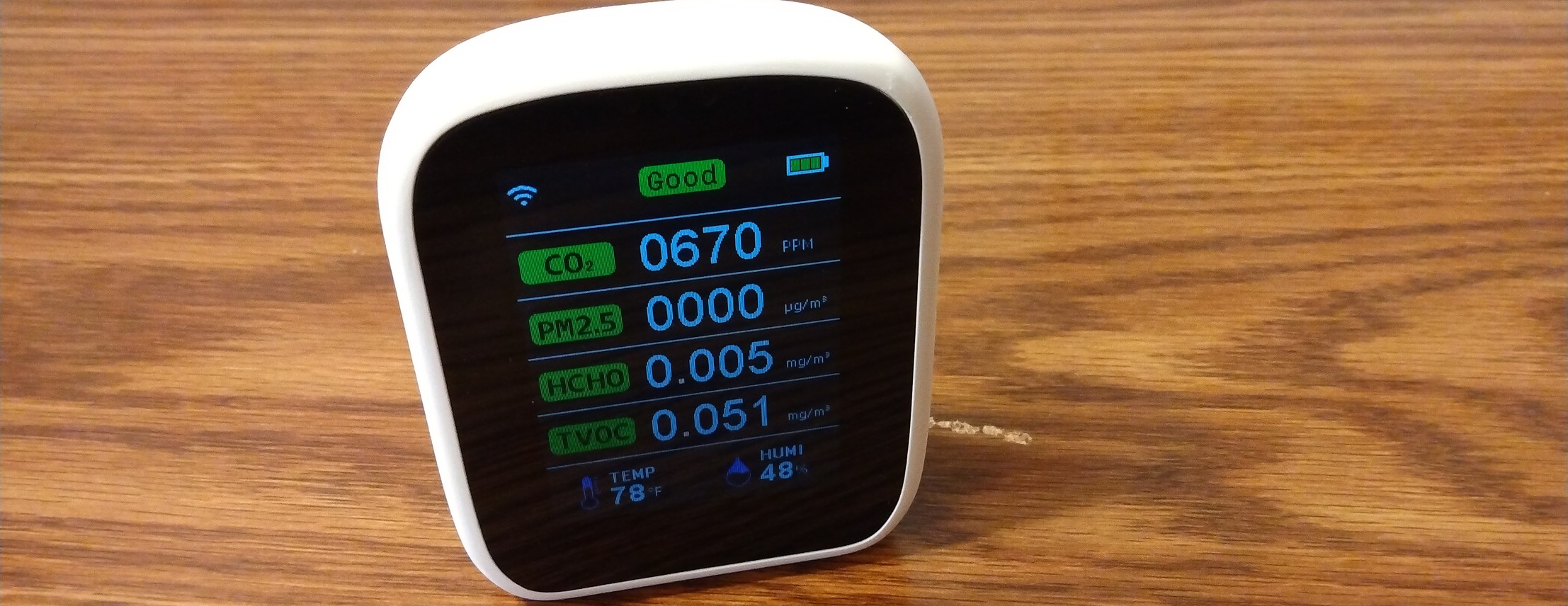
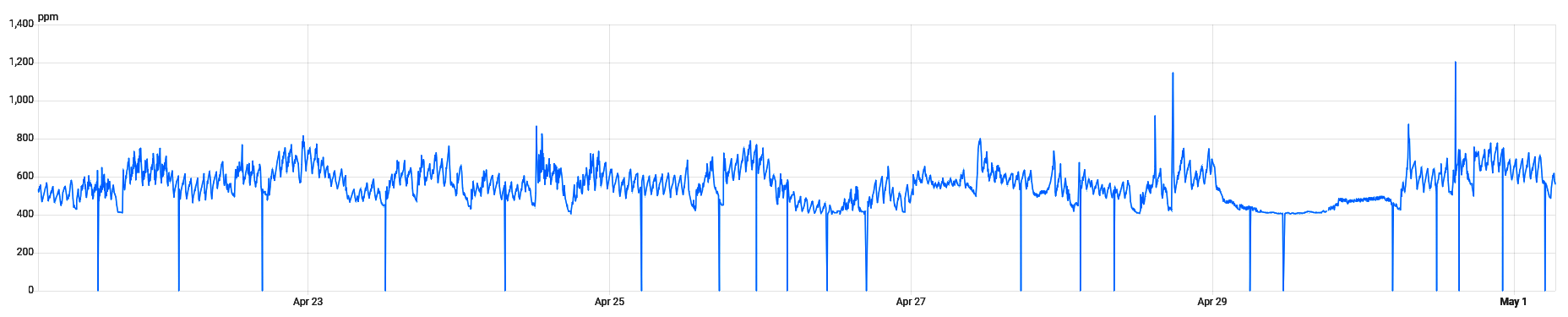
I received a (Hawk) Tuya-compatible air quality monitor as a Christmas gift in 2024. After integrating it with Home Assistant to automate my air purification system and log data, I noticed suspiciously regular ~1-hour patterns in the CO2 readings. This prompted a deeper investigation into the monitor’s actual capabilities.
Overview
This write-up documents an investigation into a (Hawk) Tuya-compatible air quality monitor purchased from Amazon. The device claims to measure carbon dioxide (CO2), volatile organic compounds (VOCs), temperature, and humidity. However, through targeted testing and data analysis, it became clear that the device does not contain a true CO2 sensor and instead derives CO2 values from VOC readings.
The monitor in question is widely available under various brand names and claims to use an NDIR sensor to measure CO2. Suspicion was raised due to consistent and regular ~1-hour oscillations in the CO2 data, even when the room was unoccupied and the HVAC system was inactive or cycling at different intervals.
Testing Procedure
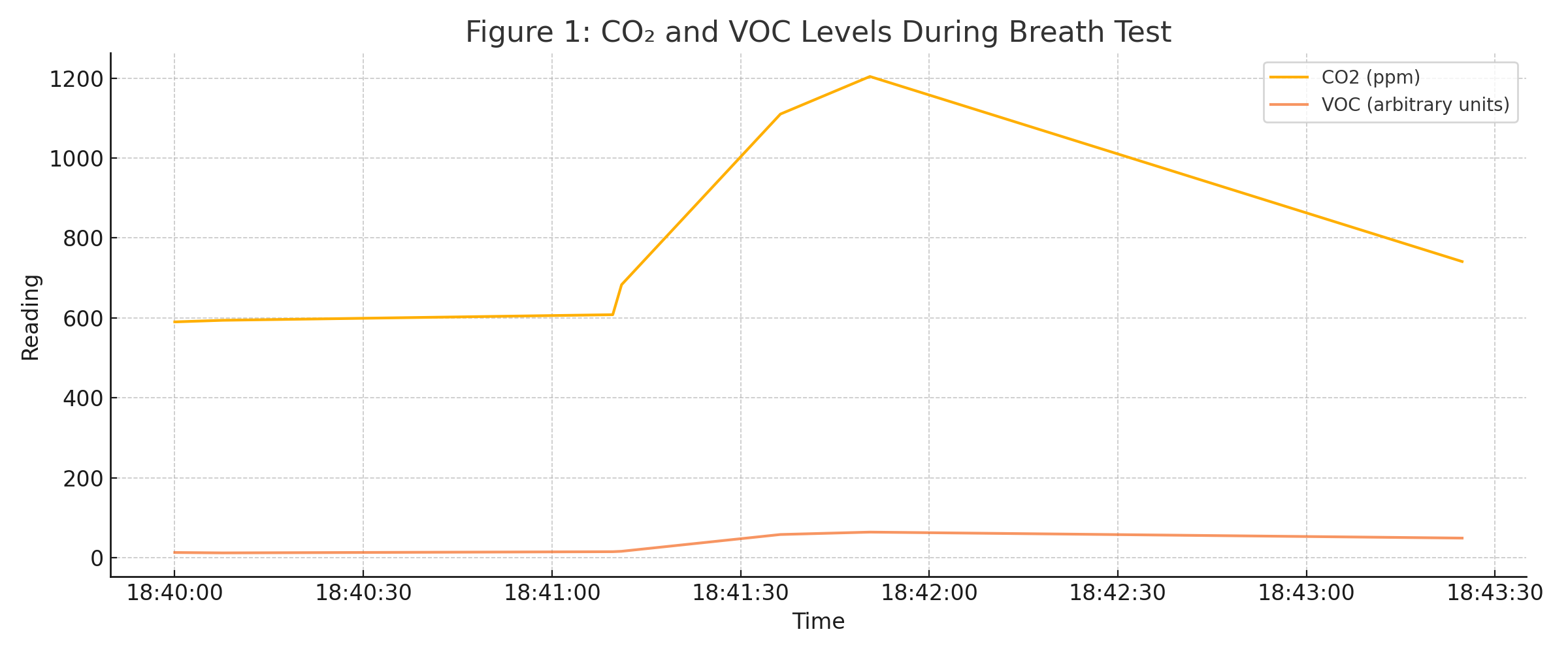
Figure 1: CO2 and VOC levels logged during a controlled breath test. VOC and CO2 spiked simultaneously, suggesting the CO2 reading is derived from VOC data.
- Data from the air quality monitor was logged over several days, revealing artificial patterns in CO2 measurements.
- Since my breath can often knock a buzzard off a manure truck, I directed a sample at the sensor. While the monitor didn’t melt as expected, it did register a sharp spike in both VOC and CO2 levels.
- A correlation analysis was conducted between VOC and CO2 readings using this test data.
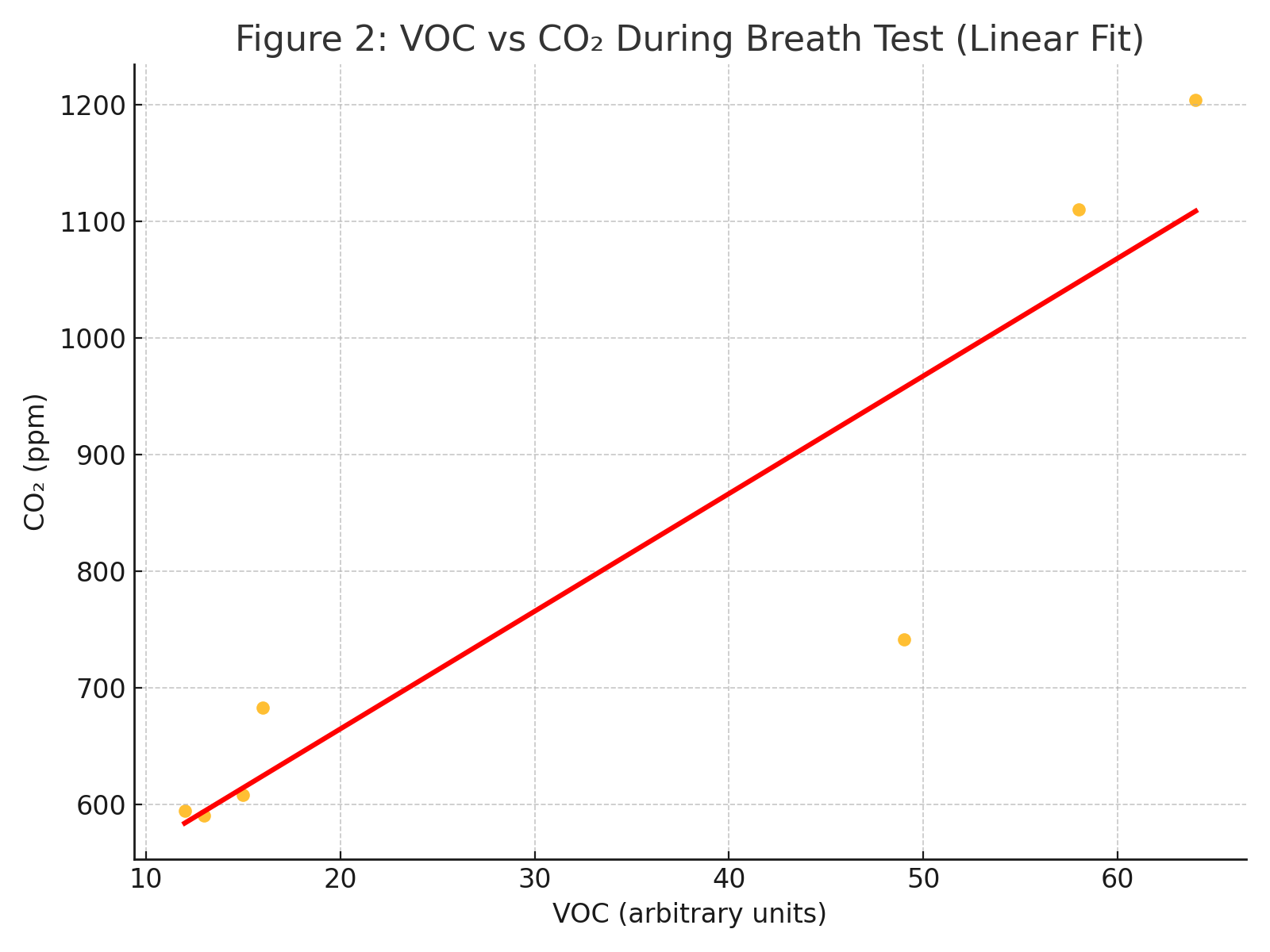
Figure 2: A strong linear correlation between VOC and CO2 values confirms that CO2 is algorithmically estimated from VOC.
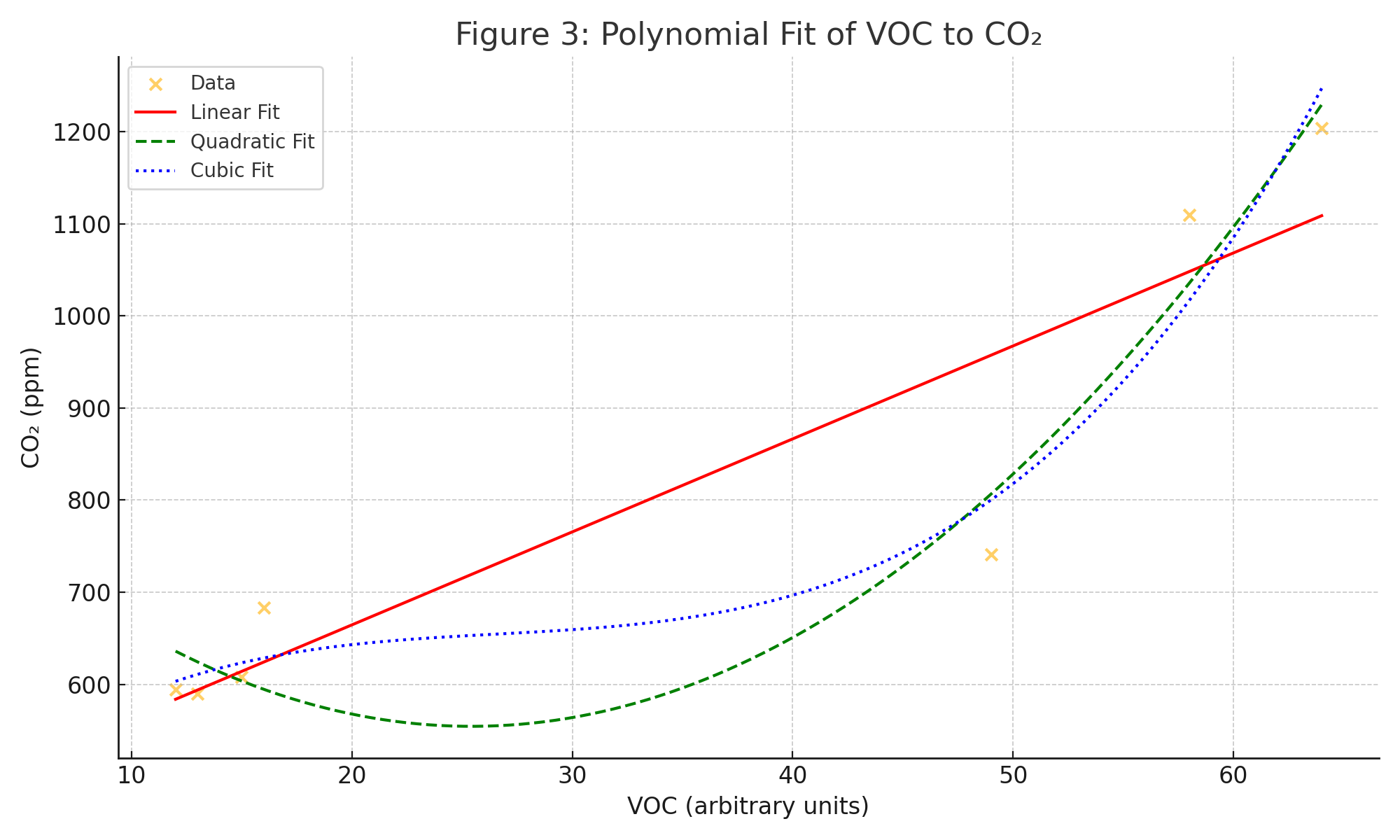
Figure 3: Polynomial regression shows that a cubic model fits the VOC-to-CO2 relationship best, supporting the idea of a predefined internal mapping.
Findings
- Strong correlation: R² ≈ 0.96 between VOC and CO2 values, indicating that the device uses an internal algorithm to estimate CO2 from VOC.
- Cubic model fit: Polynomial regression revealed that a cubic model best fits the VOC-to-CO2 relationship, confirming algorithmic derivation.
- Misleading labeling: The "CO2 sensor" label is deceptive; the device functions more like a breathalyzer or general VOC detector.
Conclusion
This (Hawk) Tuya-compatible air quality monitor does not measure CO2 directly, despite advertising to the contrary. Instead, it infers CO2 levels from VOC data, leading to artificial patterns and misleading readings. While the VOC sensor itself appears to function consistently, the CO2 output is not trustworthy for environmental or pattern analysis.
Takeaway
Consumers should be cautious of low-cost air quality monitors, especially those that promise broad functionality at suspiciously low prices. Claims of NDIR sensors should be verified through third-party reviews, teardowns, or data testing.
Also, shame on Amazon for selling this cheap, deceptively-labeled garbage. The company could put a stop to this but they look the other way because... money.
Next Steps
In the future, I might test additional VOC sources, compare the readings with a real NDIR sensor, or build a custom logger with a transparent and accurate sensing component.